
A hotel booking system is the full set of tools a hotel uses to take and manage reservations. A booking engine is the part guests use on your website to book direct. A PMS (property management system) is the core of your hotel booking software, storing every reservation and running daily operations. A modern hotel reservation system connects all three.
What Is a Hotel Booking System?
A hotel booking system is software that lets a hotel accept, record and manage room reservations. Most people use “hotel booking system” and “hotel reservation system” to mean the same thing. Both describe how a booking travels from a guest’s search to check-out.
A complete hotel booking system usually includes:
- A booking engine on the hotel website
- A PMS that holds reservations and room inventory
- A channel manager that syncs rates with booking sites
- A payment gateway for deposits and full payments
So the hotel booking system is the whole setup, and the other terms name single parts inside it. Some people also search “hotel booking system” when they mean a consumer site for finding hotels. This guide covers the hotel reservation system that hotels run themselves.
What Is a Hotel Booking Engine?
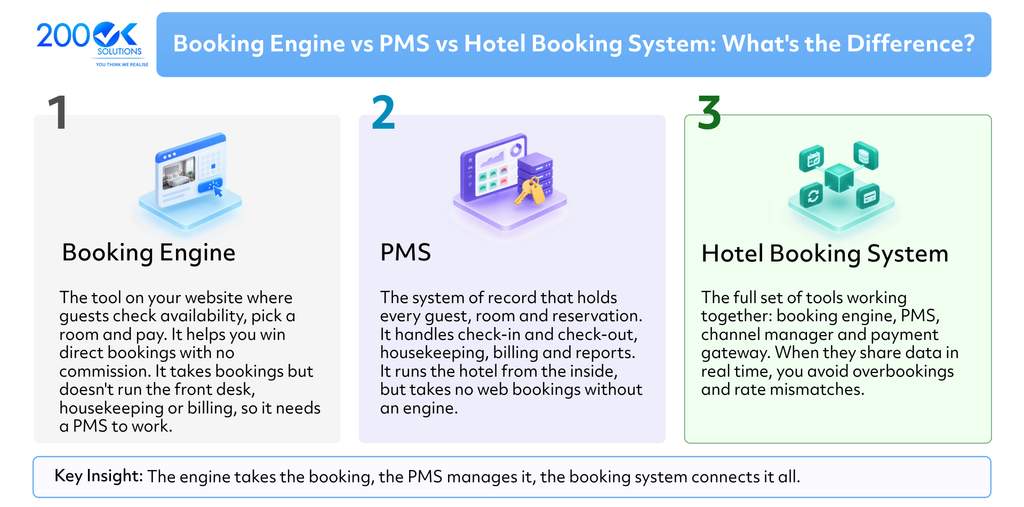
A booking engine is the tool on your website where guests check availability, pick a room and pay. It is the guest-facing side of your hotel booking software.
A good booking engine:
- Shows live rates and availability
- Works well on mobile
- Accepts promo codes and add-ons
- Sends each booking straight into the PMS
A booking engine helps you win direct bookings, so you pay no commission to booking sites. But a booking engine alone is not a hotel reservation system. It takes bookings, but it does not run the front desk, housekeeping or billing. Only a full hotel booking system does that.
What Is a PMS in a Hotel Reservation System?
A PMS is the core of the hotel reservation system. It is the system of record: the one place that holds every guest, room and reservation.
A hotel PMS typically handles:
- Reservations and room inventory
- Check-in and check-out
- Housekeeping status
- Guest billing and invoices
- Reports on occupancy and revenue
Many PMS products include a built-in booking engine, which is why buyers confuse the two. The difference is simple. The PMS runs the hotel from the inside, while the booking engine takes bookings from the outside. Together they form the hotel booking system.
Hotel Booking System vs Booking Engine vs PMS
| Tool | Main job | Who uses it | Works alone? |
| Hotel booking system | Runs the whole booking process | Hotel team and guests | It is the full setup |
| Booking engine | Takes direct bookings online | Guests | No, it needs a PMS |
| PMS | Manages rooms, guests and billing | Front desk, housekeeping | Yes, but it takes no web bookings without an engine |
| Channel manager | Syncs rates on booking sites | Revenue team | No, it needs a PMS |
Simple rule: the booking engine takes the booking, the PMS manages it, and the hotel booking system is everything working together.
What Booking System Do Hotels Use?
Most hotels use a cloud PMS with a built-in or connected booking engine and a channel manager. Chains often add a central reservation system (CRS) that controls bookings across many properties. Independent hotels usually pick an all-in-one hotel booking system. Larger groups often mix separate tools and connect them by API.
The brand matters less than one question: do the tools share data in real time? When the booking engine, PMS and channel manager do not sync, a hotel reservation system produces overbookings and rate mismatches. A reliable hotel booking system keeps every tool on the same numbers.
What Is the Best Hotel Booking Software?
There is no single best hotel booking software. The right choice depends on hotel size, budget and how many systems you already run. Compare hotel booking software on these points:
- Integration: Does it connect to your PMS, channel manager and payments?
- Direct booking tools: Promo codes, upsells and mobile checkout
- Channel management: Two-way sync, not a slow one-way push
- Reporting: Live occupancy and revenue data
- Support and price: Clear costs and a free trial
Always ask for a free trial. Test how the hotel reservation system handles one real booking from search to check-in before you sign.
Best Hotel Booking System for Small and Boutique Hotels
Small and boutique hotels usually do best with an all-in-one hotel booking system. That means one login for the PMS, booking engine and channel manager. It costs less, needs less training and cuts errors from re-entering data.
Look for hotel booking software with simple setup, monthly pricing and fast support. Skip complex enterprise tools until you run several properties. A simple hotel booking system that your team actually uses beats a powerful one that nobody understands.
How to Connect a Hotel Booking System to Your Website
To integrate a hotel booking system with your website:
- Choose a booking engine that works with your PMS.
- Add the engine’s “Book Now” button or widget to your site.
- Sync room types, rates and availability with the PMS.
- Connect your payment gateway.
- Test a booking end to end, including a cancellation.
- Track direct bookings in your analytics.
If your PMS has an API, a developer can link a custom booking flow to your hotel reservation system. That gives you more control over design and guest data.
When to Build Custom Hotel Booking Software
Off-the-shelf hotel booking software works for most hotels. A custom hotel booking system makes sense when:
- You sell rooms, activities, spa and dining in one booking
- Your old PMS blocks new features
- You are a hotel-tech company building your own hotel booking software
- Your systems do not talk to each other
Custom builds cost more and take longer, so compare build against buy honestly. 200OK Solutions builds booking engines, channel manager integrations and PMS modernisation for hospitality teams, including an activity booking platform for a UK resort.
FAQ: Hotel Booking System, Booking Engine and PMS
Q. What is the difference between a hotel booking system and a PMS?
A. A PMS is one part of the hotel booking system. The PMS manages rooms, guests and billing. The hotel booking system also includes the booking engine, channel manager and payments.
Q. Is a booking engine the same as a hotel reservation system?
A. No. A booking engine takes online bookings. A hotel reservation system stores and manages them.
Q. Do I need a PMS if I already have a booking engine?
A. In most cases, yes. A booking engine needs a PMS to hold reservations and room inventory.
Q. Why do hotels want direct bookings?
A. Direct bookings avoid booking-site commission and give the hotel the guest’s contact details. A good hotel booking system makes direct booking easy.
Q. How much does hotel booking software cost?
A. Pricing varies by hotel size and features. Many vendors charge monthly by room or property, so ask for a clear written quote.
Conclusion
A hotel booking system is the whole setup. The booking engine takes direct bookings, and the PMS runs daily operations. Choose hotel booking software that connects all three in one hotel reservation system, and your hotel booking system will stay accurate, direct and easy to run.
You may also like : Hotel Revenue Management Software: The Smarter Way to Fill Rooms